
Why Free Isn't Enough: How Smart Campaign Strategy Drives Program Enrollment
Connecting with hard-to-reach communities by integrating digital and on-the-ground outreach
You'd think free would sell itself, but it comes with challenges familiar to many nonprofits and local governments running grant-funded programs.
If you've ever tried to drive enrollment for a free program, especially in a multilingual, underserved community, you know that advertising something as 'free' is not enough. ‘Free’ doesn’t mean the right people hear about it, trust it, and actually sign up. ‘Free’ comes with its own biases and requires its own strategy, creative, and tools.
The City of Menlo Park learned this firsthand. They were offering free home electrification upgrades to qualifying residents. Grant funding was on the clock. And despite months of traditional outreach, applications weren't coming in fast enough, and they were ready for new ideas.
Start with the problem, not the tactic
The instinct when a program isn't getting traction is to do more. More mailers, more door knocking, more events. And while they were getting spikes of interest after these activities, it wasn’t doing enough fast enough. So we took a sprint-based approach to this campaign, tackling the priorities as they came.
Before we built anything, we looked at the real barriers. Was the program hard to find? Hard to understand? Hard to trust? For a free home electrification program in a multilingual neighborhood, the answer was all three. Not enough residents were hearing about it; they didn’t know why they should enroll, and with everything ‘free,’ the program's legitimacy came into question.
By understanding the root problem of adoption, our approach was built to address and overcome it.
Build messaging pillars before you build creative
It can be tempting to lead with design, but we always start by looking at what a campaign needs to say. We had three core messages: no-cost upgrades, program legitimacy, and home health and safety benefits. And these messages showed up in every piece of creative in this campaign — digital and print, bilingual in English and Spanish.
That consistency matters. When someone sees a door hanger on Monday, a social ad on Wednesday, and a video on Friday, and all three say the same thing in a way that feels familiar, that builds trust.
Take what's already working and make it better
The City of Menlo Park and their community-based organization partners were already doing on-the-ground outreach in their priority neighborhood of Belle Haven. That existing presence and neighborhood trust were an asset we wanted to leverage. The City just needed better tools.
We started by refreshing their existing communication materials. Updated layouts, cleaner visuals, stronger calls to action, and consistent messaging across every piece. This gave the city and their CBO partners more effective print materials to use immediately — door hangers, postcards, posters, lawn signs — while we built out the digital campaign.
Don't abandon what's working. Strengthen it, and build from there.
Video builds trust at scale
For a program asking residents to ultimately invite contractors into their homes, trust was everything. We knew authentic storytelling would be key to driving conversion, so we developed a hero video featuring a real local homeowner sharing their firsthand experience with the program, alongside city staff to speak to its legitimacy.
In partnership with Together Pictures, one capture became a full suite of content: a hero video plus 30-, 15-, and 6-second edits targeting the campaign's core messages across platforms and placements. Flexible, efficient, and built to work across every channel in the media mix.
The most efficient video strategy isn't producing more; it's planning one really good shoot that will work hard across every channel.
Use technology where it works best
Once the strategic foundation was in place, we launched a hyper-targeted programmatic campaign designed to move residents from awareness to action. Meta platforms and online video built reach. Performance Max, search, and site retargeting moved high-intent residents toward conversion.
The power of programmatic advertising isn't just reach — it's precision. We weren't broadcasting to the whole Bay Area. We were reaching the right households, in the right neighborhoods, with the right message, at the right moment.
And the results show it: 799,610 impressions delivered within a tightly defined Bay Area geography.
The results
The campaign concluded in March 2026 and final program results will take time to be captured. But the first month alone told a clear story:
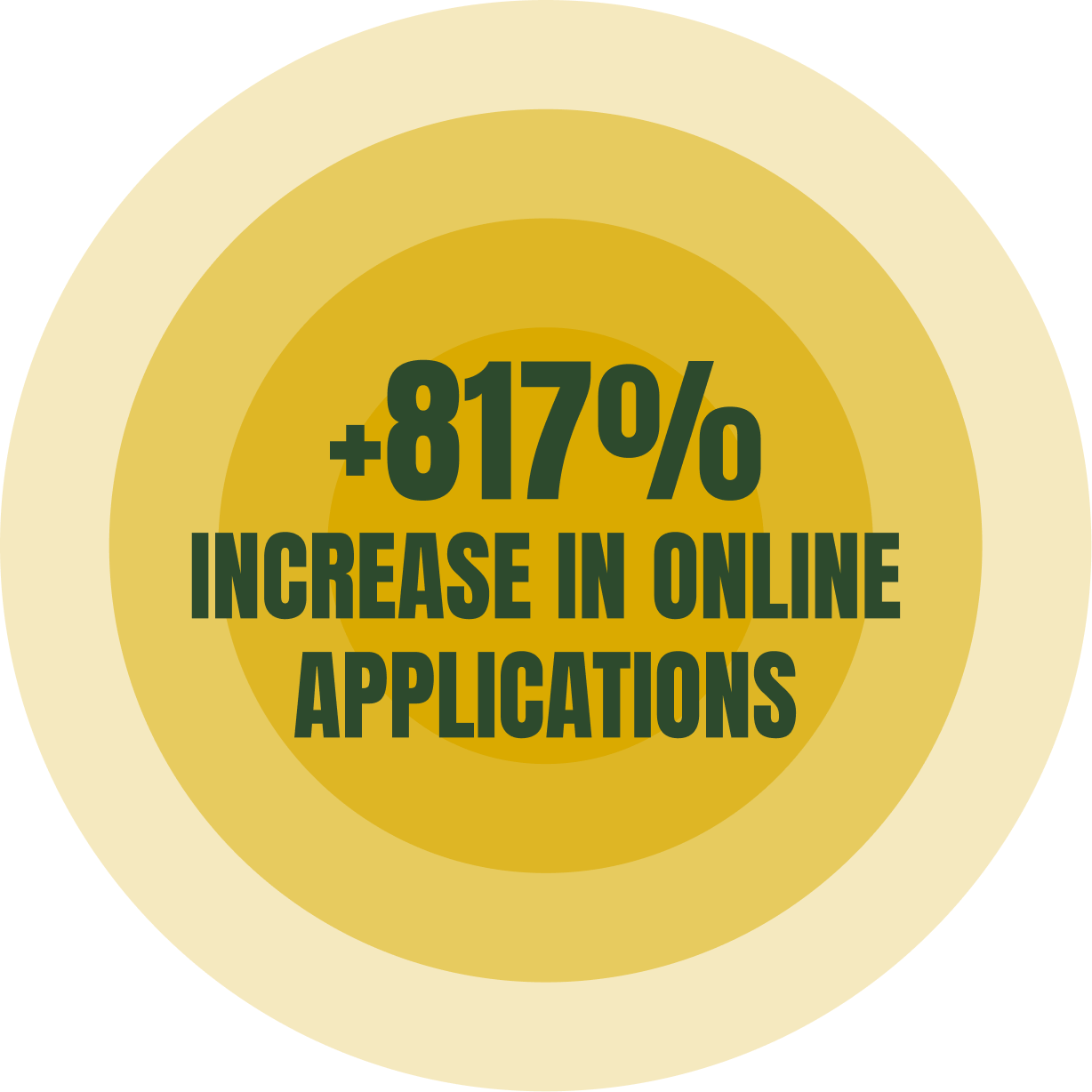
+817% increase in monthly applications received
+283% increase in monthly assessments completed
+333% increase in monthly signed participation agreements
Before the campaign launched, the program had averaged just 6 applications per month over 17 months. Smart, targeted strategy changed that quickly.
Frequently Asked Questions
-
Free removes the financial barrier, but it doesn't remove the awareness or action barriers, and often introduces new trust issues. People need to hear about a program through channels they trust, understand what it involves, and feel confident it's legitimate before they'll engage. Effective marketing should address all three.
-
The most effective approach combines hyper-targeted programmatic advertising with on-the-ground outreach. Digital reaches people where they already spend time; on-the-ground outreach builds the neighborhood trust that makes digital more effective. Bilingual creative, culturally relevant messaging, and community-based organization partnerships are essential components for multilingual and underserved communities.
-
A sprint-based approach compresses the typical campaign timeline by prioritizing deliverables and working in focused bursts rather than long sequential phases. It's designed for situations where speed matters without sacrificing strategic rigor or creative quality.
-
Programmatic advertising uses automated technology to serve ads to specific audiences across multiple channels — social media, video, search, display — in real time. For program enrollment campaigns, it's particularly effective because it can target by geography, behavior, and intent, and retarget people who have already shown interest. It's a cost-efficient way to reach a large number of the right people without wasting budget on broad, untargeted exposure.
-
Authentic video, featuring real people with real experiences, builds the kind of trust that drives action. For community outreach campaigns especially, seeing someone who looks like you, lives in your neighborhood, and has already benefited from a program is far more persuasive than any statistic. Short-form video cut-downs extend that trust-building content across platforms efficiently.
Good Stuff Partners is a Bay Area brand and communications agency working with nonprofits, government agencies, and mission-driven organizations. Read the full Menlo Park case study.